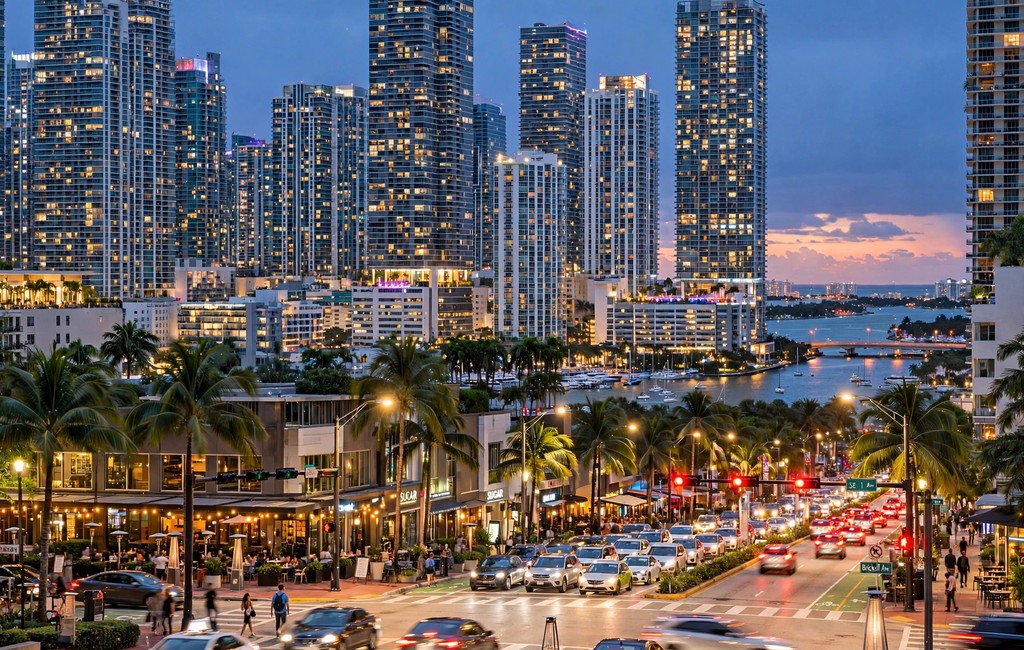
Yes, Brickell feels crowded in daily life, even though its condo market has cooled lately. Streets, bridges, gyms, and pools carry more people than the neighborhood comfortably holds. The crowds come from residents, workers, tourists, and short-term renters at once.
About 40,000 residents now live in roughly one square mile of towers. Meanwhile, developers plan more than 4,500 new condo units by 2030. This guide weighs the growth, the gridlock, and the case for staying.
Key Takeaways
- Density leads the complaint: About 40,000 residents share roughly one square mile in Brickell.
- New supply keeps coming: Developers plan more than 4,500 new condo units by 2030.
- Traffic hurts most at rush hour: Bridge openings and event crowds regularly jam Brickell Avenue.
- Rentals change the feel: Short-term guests now crowd pools, gyms, and lobbies in many towers.
- The market tells another story: Median condo prices fell about 13 percent, and listings average 133 days.
The Numbers Behind the Crowded Feeling
Brickell counts as Miami’s densest neighborhood, with about 40,000 residents in one square mile. More than 80 condo buildings pack that small area along Biscayne Bay. The population nearly tripled between 2000 and 2016 alone. Growth has slowed nowhere near enough for longtime residents.
In addition, developers plan more than 4,500 new condo units by 2030. St Regis Residences and The Standard Residences target delivery in 2027. Meanwhile, one major project, One Brickell City Centre, faced cancellation in 2025. Still, the pipeline points toward more neighbors, not fewer.
In fact, Florida adds about 900 new residents each day, second only to Texas. Many newcomers choose Brickell for jobs, walkability, and waterfront towers. Young professionals from New York and California lead the recent influx. International buyers from Latin America and Europe add further demand.
Downtown workers add daytime crowds beyond the resident count alone. Office towers fill each morning with commuters from across Miami-Dade County. Meanwhile, tourists and event visitors swell sidewalks on weekend nights. The real daily population likely exceeds the resident figure by thousands.
Streets, Bridges, and the Daily Commute
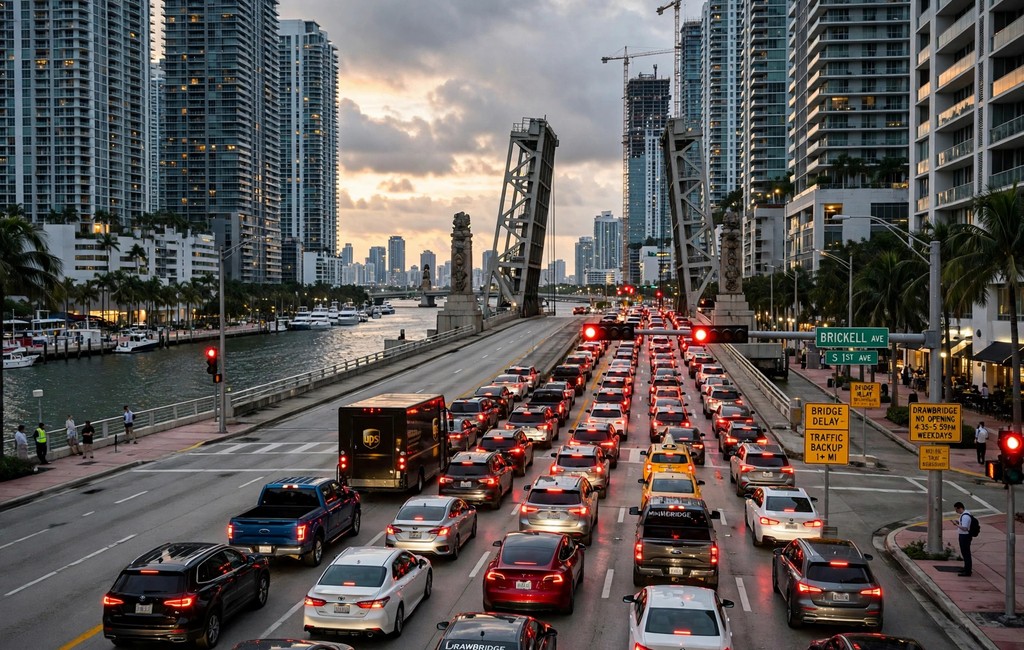
First, Brickell Avenue carries commuters, tourists, delivery trucks, and residents through one narrow corridor. The avenue bridge should stay closed during weekday rush hours by posted rule. Yet residents report repeated openings during restricted morning and evening periods. Each opening can stall traffic for 30 to 45 minutes.
Event nights worsen the jam, since Heat games fill the nearby arena district. Fans and commuters cross paths around Biscayne Boulevard and Brickell corridors. Meanwhile, delivery vehicles double-park along streets already short on space. A simple grocery run can stretch into an hour-long ordeal.
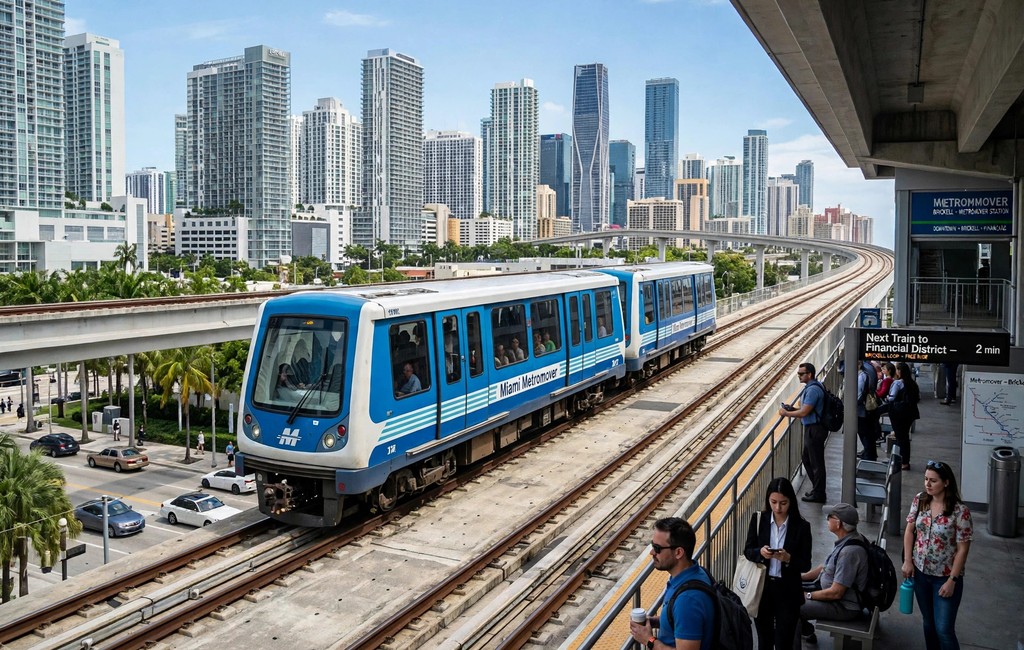
Transit helps, but it strains too, since the free Metromover loops through downtown. Financial District station closed for about five weeks from late October for upgrades. During the closure, Brickell station handles extra riders with a broken escalator. Riders should allow extra travel time through the work.
Towers, Tourists, and Shared Spaces
Meanwhile, short-term rentals changed many Brickell towers from communities into part-time hotels. Rolling suitcases click through lobbies weekly as guests rotate in and out. Pools and gyms fill with visitors who treat shared spaces like hotel amenities. Longtime residents feel the difference most on weekends.
About 1,200 condos currently list for sale across Brickell, averaging 133 days on market. Median sale prices fell about 13 percent year over year to $600,000. In addition, many units sell about 6 percent below asking price. Buyers gain negotiating room, but streets gain no relief.
Two-bedroom rents start around $2,500 monthly, while resale units start near $400,000. New luxury units, by contrast, start around $800,000 and climb fast. That gap pushes many workers toward rentals instead of ownership. Rentals, in turn, keep towers full and amenities busy.
Noise, Nights, and Quality of Life
Noise now ranks among the loudest complaints from Brickell residents. Engines, motorcycles, and rental cars rev through the night on South Miami Avenue. Some residents hear the racket from the 40th and 50th floors. Sleep suffers, and patience wears thin across the neighborhood.
For example, Monica Mejia, a 15-year resident, started a petition demanding city action. Her petition gathered 1,000 signatures within its first 24 hours. Support soon approached 2,000 signatures from frustrated neighbors. The petition targets loud engines, drag racing, and sleepless nights.
City leaders promised targeted enforcement with police in key hotspots. Officers, however, can cite noise only when they personally witness violations. The commissioner also plans talks with luxury rental companies about education. Residents still await visible relief on the noisiest streets.
The Other Side: Why People Still Move Here
Brickell still attracts newcomers with walkable streets and a true financial district. Jobs cluster here, with office rents above Manhattan levels by some measures. The free Metromover and Metrorail connect homes, offices, and Brickell City Centre. Many residents live, work, dine, and train without a car.
Brickell City Centre anchors the district with shops, restaurants, offices, and the EAST hotel. Trendy bars and restaurants keep evenings lively for younger residents. Waterfront views and full-service towers add resort-style amenities daily. For many, that package outweighs the crowds outside.
Food lovers also gain, since new restaurants open steps from most towers. International flavors crowd menus from Latin America, Europe, and Asia. Meanwhile, weekend markets and bayfront parks offer calmer escapes nearby. Brickell rewards residents who explore beyond their own building.
What Would Make Brickell Feel Less Crowded
Better transit capacity would help most, since trains and movers already run free downtown. Completing Metromover upgrades on schedule matters for daily riders. In addition, clearer station notices would ease confusion during closures. Small fixes can calm big crowds quickly.
Bridge discipline would help too, since posted rush-hour closures already exist on paper. Enforcement should stop openings during restricted morning and evening windows. Meanwhile, police details should target drag racing and engine noise hotspots. Residents ask for visible action, not another study.
Buildings can help by enforcing rental rules and protecting shared amenities. Clear guest policies would return pools and gyms to residents first. Likewise, rental companies can brief guests on noise rules at check-in. These steps cost little yet restore daily calm.
Parks and bayfront paths also need attention, since green space relieves dense blocks. More shade, benches, and open lawns would spread crowds thinner. In addition, weekend street closures could give pedestrians room to breathe. Small public spaces can make a dense district feel livable.
So, Should You Move to Brickell or Just Visit?
Visit first on a weekday, then return on a weekend night before deciding. Weekdays show the workday rush, while weekends reveal the party crowds. Check your building’s rental policy before signing any lease or purchase. A strict policy protects quiet halls and open amenities.
Choose a tower near a Metromover station to cut driving from daily life. Budget for higher HOA fees, since full-service towers charge accordingly. Meanwhile, expect construction noise as new towers rise through 2027. Patience helps, but earplugs help more.
The Verdict on Brickell Crowds
Brickell feels crowded because its streets, bridges, and amenities carry a small city’s load. New towers will add thousands more neighbors through 2030. Walkability, jobs, and transit keep the neighborhood deeply attractive. Still, crowds have not emptied Brickell of its appeal.
Spend a day in Brickell before you judge its crowds yourself. Ride the Metromover, cross the bridge at rush hour, and visit a tower gym. Then decide whether the energy excites you or exhausts you. Share your verdict in the comments for future movers.
Frequently Asked Questions
Is Brickell the most crowded neighborhood in Miami?
Yes, Brickell ranks as Miami’s densest neighborhood, with about 40,000 residents in one square mile.
Why does Brickell Avenue jam during rush hour?
Bridge openings, event crowds, and delivery trucks converge on one narrow corridor at peak times.
Are Brickell condos still expensive despite the crowds?
Median condo sales sit near $600,000, down about 13 percent, with listings averaging 133 days.
Does Brickell have good public transit for car-free living?
Yes, the free Metromover and Metrorail connect homes, offices, shops, and Brickell City Centre.
Is Brickell noisy at night for residents?
Yes, many residents report engine noise and racing late at night, especially near South Miami Avenue.